ByJohn A
Mastering the Abaya: A Step-by-Step Guide
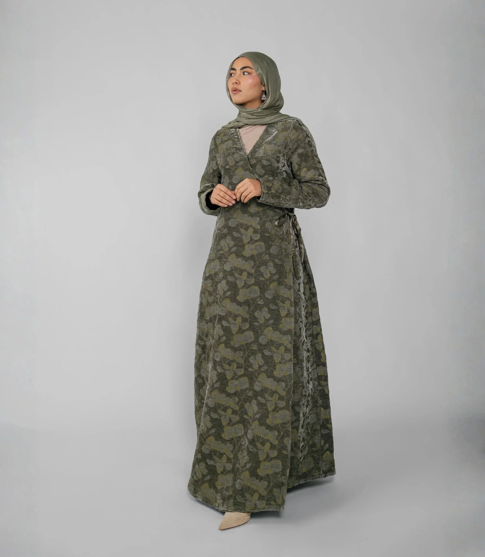
Most women who struggle with abaya styling are making one of three mistakes: choosing the wrong silhouette for their body proportions, treating the abaya as the end of the outfit rather than the starting point, or buying in colors that do not integrate with the rest of their wardrobe. Getting the abaya right is not complicated once you have a clear process for making these decisions.
This guide walks through each step in order.
Step One: Choose the Right Abaya Silhouette for Your Frame
The silhouette is the first decision because it determines how the abaya for women sits on the body and interacts with the rest of the outfit.
A closed abaya creates one continuous line from shoulder to hem. It suits women who want a clean, minimal look where the abaya is the outfit and the hijab is the only other element. Closed abayas in crepe or nida work well because these fabrics hold their shape without clinging, which creates a smooth, covered silhouette without bulk.
An open abaya functions more like a coat. It sits over an inner outfit, which means the styling possibilities are wider and the abaya works as a layer rather than a full outfit. Open abayas suit women who prefer to show the inner pieces they are wearing and want more control over how the overall look is assembled. They are also more practical for variable temperatures because they can be removed without affecting the covered modesty of the inner outfit.
Butterfly and kimono-sleeve abayas add volume at the sleeves, which creates width across the shoulders and a flowing, dramatic silhouette. These styles suit taller frames and women with narrower shoulder lines who want to add visual width at the top.
See also: 10 Affordable Home Saunas Worth Actually Buying in 2026
Step Two: Match the Abaya Fabric to the Occasion
The fabric of an abaya changes how formal or casual it reads, which determines where it is appropriate to wear.
Crepe and nida are the most versatile fabrics for everyday and work abaya wear. They drape smoothly, resist creasing, and hold their shape through a full day of wear without looking tired by midafternoon. These fabrics suit professional environments and daily wear equally well.
Chiffon and silk-blend abayas are better suited to formal occasions and events. The lighter, more flowing drape reads as refined for special occasions but can look too formal or delicate for everyday practical use.
Jersey abayas suit casual wear specifically. The stretch and softness of jersey makes it comfortable for active casual days, but the relaxed quality of the fabric does not read as appropriate for formal settings.
Linen abayas are the strongest option for warm-weather casual wear. The natural, textured quality of linen suits outdoor settings and warm climates and reads as relaxed and considered without looking underdressed.
Step Three: Choose Abaya Colors That Work with Your Hijab Wardrobe
An abaya that does not integrate with the hijabs you already own creates a coordination problem every time you get dressed. The most practical approach is to choose abaya colors that work with at least three or four hijabs already in your wardrobe.
Black is the most practical abaya color because it pairs with every hijab color without exception. A black abaya requires no color coordination decision for the hijab and suits every occasion from casual to formal.
Camel and warm ivory are the second most practical choices. These warm neutrals pair with most hijab colors and suit a wide range of occasions. A camel open abaya over a black inner outfit with almost any hijab color reads as cohesive without any planning.
Deep tones, navy, forest green, and burgundy, are strong choices for formal abayas. These colors suit any occasion dressing and pair well with both neutral and rich-toned hijabs.
Step Four: Build the Outfit Around the Abaya
The abaya is the largest piece in the outfit. Everything else, the hijab, the inner clothing for open abayas, and the accessories, should be chosen to work with it rather than against it.
For closed abayas: the hijab and accessories are the only variables. A closed black crepe abaya with a camel modal hijab and simple gold jewelry is a complete look. There is nothing else to add. Keep the hijab in a solid or quietly printed fabric and let the abaya’s clean silhouette carry the look.
For open abayas: the inner outfit becomes part of the overall look. Keep the inner pieces in solid neutrals that complement the abaya color. A forest green open abaya over a cream shirt and cream wide-leg trousers is cohesive because the inner pieces use one of the abaya’s complementary neutrals. A hijab in dusty rose or warm ivory ties the look together without adding a third color.
Step Five: Dress the Abaya for Different Occasions
Casual daily wear: A jersey or linen abaya in a neutral, worn open over simple inner pieces with a comfortable, low-maintenance hijab. No additional accessories needed.
Work and professional settings: A crepe or nida abaya in a closed silhouette or clean open style. Keep the color in a professional neutral: black, navy, charcoal, or camel. The hijab should be solid and smooth-draped. One or two pieces of understated jewelry are the limit.
Special occasions: A silk-blend or chiffon abaya in a deeper or richer tone. Embroidered or embellished detail works well for celebrations. A matching or complementary hijab in the same color family, with fine jewelry and structured footwear, completes the formal look.
Travel: A crease-resistant crepe abaya that packs flat and returns to shape quickly. Open abayas pack more easily than closed ones because they fold flat without the need to maintain a structured silhouette.
Frequently Asked Questions
How do I choose my first abaya if I have never worn one before?
Start with a closed black crepe abaya. Black pairs with every hijab color, crepe fabric holds its shape through a full day, and a closed silhouette is the cleanest starting point. From there, you can add an open abaya in a neutral like camel or navy once you understand which silhouette suits your frame and lifestyle.
What is the right abaya length?
The hem should reach close to the floor, ideally within a few centimetres, for a clean, covered silhouette. An abaya that finishes mid-calf looks incomplete and defeats the purpose of full coverage. When buying online, check the brand’s size guide for the hem length at your height rather than guessing from the standard length.
Can I wear an abaya to work?
Yes. A closed crepe or nida abaya in a professional color, black, navy, or charcoal, suits most office environments. Pair with a solid, smooth-draped hijab and minimal accessories. Open abayas also work professionally when worn over a clean inner outfit in neutral tones.
How do I accessorize an abaya without overdoing it?
Keep accessories minimal. For everyday and work wear, a simple bag, flat or low-heeled shoes, and fine jewelry are enough. For formal occasions, add slightly richer jewelry and a more structured bag, but avoid heavy embellishment on top of an already-embellished abaya. The abaya does most of the work.
Explore VELA’s full abaya collection for styles that suit every occasion: velascarves.com/collections/abayas